Discovery of Bacteria Visible to the Naked Eye

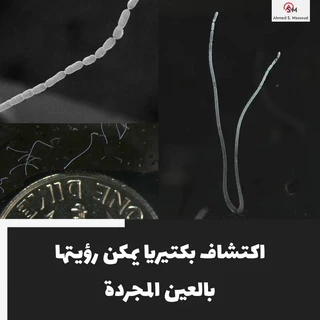 Image credit: Ahmed Massoud
Have you ever imagined that there is a bacterium the size of an eyelash, and that it can be seen with the naked eye?!
In a study published in Science magazine, a team of researchers discovered an unprecedented giant bacterium named Candidatus Thiomargarita magnifica. This bacterium is not microscopic like most known bacteria; it can be seen with the naked eye, reaching a length of over a full centimeter — an astonishing size for any bacterial organism!
But what makes this bacterium remarkable is not just its size, but its unique internal organization. Unlike most bacteria, which contain floating DNA inside the cell, Thiomargarita magnifica contains membrane-bound organelles — similar to those found in eukaryotic cells — such as a nucleus where the DNA (the organism’s genetic material) is stored.
Not only that, it has a complex life cycle characterized by asymmetric genome division among its new cells, raising significant questions about how this bacterium grows.
This discovery challenges our traditional view of bacteria as simple, small, and limited-sized organisms, and confirms that there is much we still do not know about our world.
Are we beginning to discover new worlds within this microscopic world that we once thought was simple?
Think with me… how could this giant bacterium affect the marine environment where it was found? And could it have an important role in ecological balance or in future scientific and medical applications?
Sources:
Click for Arabic Translation - النص بالعربية
في دراسة نشرت في مجلة ساينس، اكتشف فريق من الباحثين بكتيريا عملاقة غير مسبوقة، اسمها Candidatus Thiomargarita magnifica. هذه البكتيريا ليست مجهرية كما هي عادة معظم أنواع البكتيريا المعروفة، بل يمكن رؤيتها بالعين المجردة حيث يصل طولها لأكثر من سنتيمتر كامل — وهو حجم مذهل بالنسبة لأي كائن بكتيري!
لكن ما يميز هذه البكتيريا ليس فقط حجمها، بل طريقة تنظيمها الداخلي الفريدة. فعلى عكس معظم البكتيريا التي تحتوي على DNA عائم داخل الخلية، فإن Thiomargarita magnifica تحتوي على عضيات محاطة بأغشية — تشبه تلك الموجودة في خلايا حقيقيات النواة — كالنواة التي يُخزن فيها الـ DNA.
ليس هذا فقط، بل لديها دورة حياة معقدة تتميز بتقسيم غير متماثل للجينوم بين خلاياها الجديدة، مما يفتح أمامنا تساؤلات كبيرة حول كيفية نمو هذه البكتيريا.
هذا الاكتشاف يغير مفهومنا التقليدي للبكتيريا ككائنات بسيطة محدودة الحجم وصغيرة جدًا، ويؤكد أن هناك الكثير مما لا نزال نجهله في عالمنا.
هل بدأنا نكتشف عوالم جديدة داخل هذا العالم المجهري الذي كنا نظنه بسيطًا؟
فكر معي… كيف يمكن أن تؤثر هذه البكتيريا العملاقة في البيئة البحرية التي عُثر عليها فيها؟ وهل يمكن أن يكون لها دور مهم في التوازن البيئي أو في تطبيقات علمية وطبية مستقبلية؟
المصادر:
Post on Linkedin
